
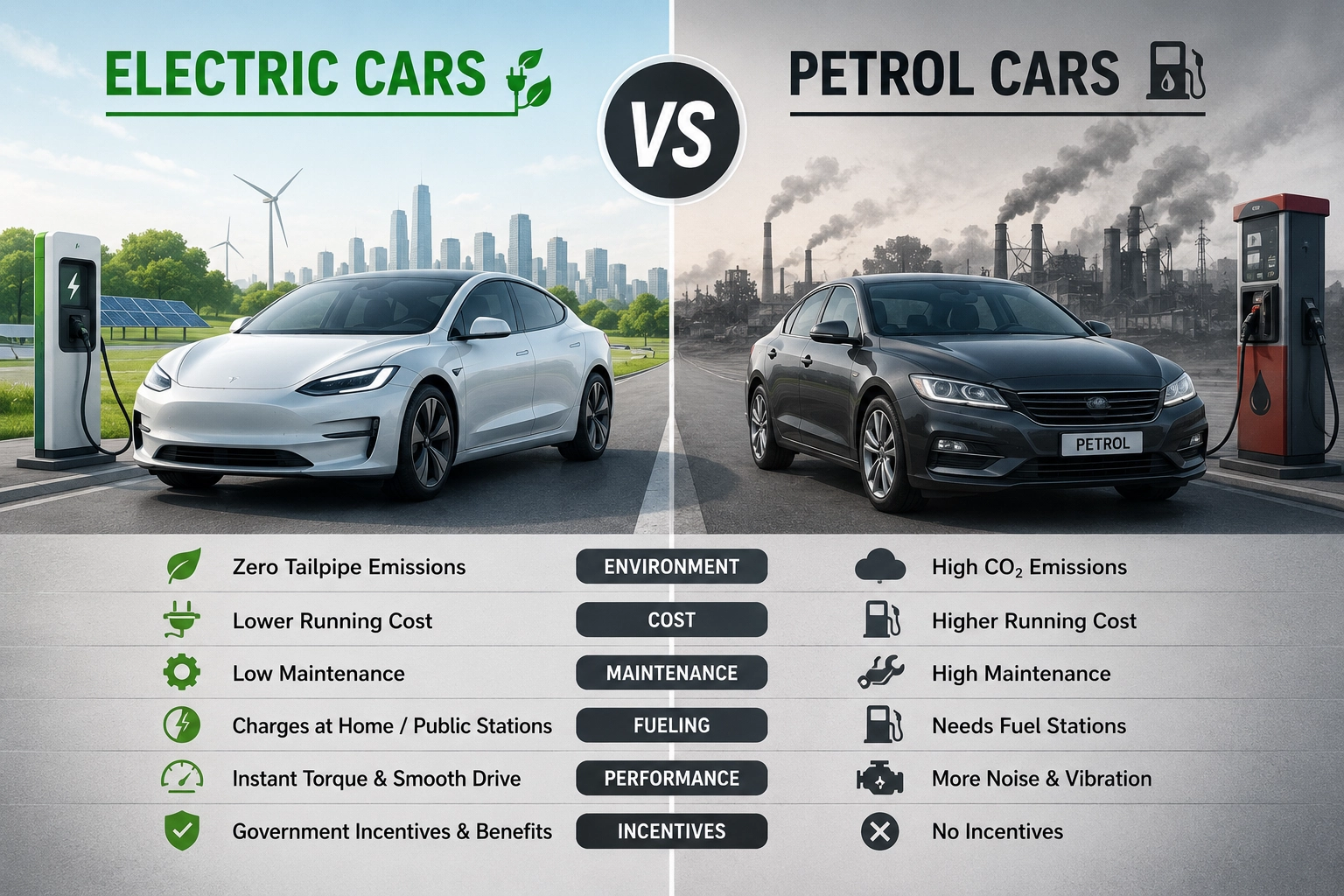
The debate over Electric Cars vs Petrol Cars has become increasingly relevant as more drivers consider switching to electric vehicles (EVs). Rising fuel prices, advancements in battery technology, and growing environmental awareness have accelerated the adoption of electric cars worldwide.
While petrol-powered vehicles remain popular due to their established infrastructure and convenience, electric cars offer lower running costs, zero tailpipe emissions, and cutting-edge technology. Choosing between the two depends on your driving habits, budget, charging availability, and long-term ownership goals.
Let’s compare both options across several important factors.
Purchase Price Electric Cars vs Petrol Cars
Electric cars generally have a higher upfront purchase price because of battery costs. However, government incentives and declining battery prices are making EVs increasingly affordable.
Petrol cars typically cost less initially, making them attractive for buyers with limited budgets.
Learn more about electric vehicles:
https://www.energy.gov/eere/electricvehicles/electric-vehicles
Running Costs Electric Cars vs Petrol Cars
Electric vehicles are usually much cheaper to operate.
Electricity often costs less than petrol, and EVs convert energy into motion more efficiently. Over time, drivers can save significantly on fuel expenses.
Petrol vehicles continue to face fluctuating fuel prices, increasing long-term operating costs.
Maintenance Electric Cars vs Petrol Cars
Electric cars have fewer moving parts than petrol vehicles.
EVs do not require:
- Engine oil changes
- Spark plug replacements
- Timing belts
- Exhaust system repairs
This generally results in lower maintenance costs.
Petrol cars require regular servicing to maintain engine performance.
Performance
Electric vehicles deliver instant torque, providing quick acceleration and a smooth driving experience.
Petrol cars offer a familiar driving feel and are often preferred for long-distance travel where fuel stations are widely available.
Performance now varies more by vehicle model than by power source alone.
Charging vs Refueling
Charging infrastructure continues to expand globally.
EV owners can charge:
- At home
- At workplaces
- At public charging stations
- At fast-charging networks
Petrol cars benefit from extensive fuel station networks and faster refueling times.
Drivers should consider local charging availability before purchasing an electric vehicle.
Environmental Impact
Electric cars produce zero tailpipe emissions, helping improve urban air quality.
Their overall environmental impact depends on how electricity is generated and battery manufacturing processes.
Petrol cars emit carbon dioxide (CO₂) and other pollutants during operation, contributing to air pollution and climate change.
Driving Range
Modern electric vehicles now offer ranges exceeding 400–600 km on a single charge for many models.
Petrol cars generally provide longer driving ranges and can be refueled within minutes, making them convenient for frequent long-distance travel.
Battery technology continues improving each year.
Technology Features
Many modern EVs include advanced features such as:
- Over-the-air software updates
- Smart navigation
- AI-powered driving assistance
- Regenerative braking
- Smartphone integration
- Advanced safety systems
Petrol cars increasingly include similar technologies, although EV manufacturers often lead in software innovation.
Long-Term Ownership Costs
Although EVs often cost more initially, many owners recover the difference through:
- Lower fuel costs
- Reduced maintenance
- Government incentives
- Lower operating expenses
Petrol vehicles may remain less expensive upfront but generally incur higher fuel and maintenance costs over time.
Which One Is Better? Electric Cars vs Petrol Cars
The answer depends on your needs.
Choose an Electric Car if you want:
- Lower running costs
- Environmentally friendly transportation
- Advanced technology
- Quiet driving
- Reduced maintenance
Choose a Petrol Car if you need:
- Frequent long-distance travel
- Fast refueling
- Lower upfront purchase price
- Reliable access where charging infrastructure is limited
As charging networks continue expanding and battery technology improves, electric vehicles are expected to become an increasingly attractive option for many drivers.
Final Thoughts
The Electric Cars vs Petrol Cars debate has no one-size-fits-all answer. Electric vehicles excel in efficiency, lower maintenance, and environmental benefits, while petrol cars continue to offer convenience, established refueling infrastructure, and lower initial purchase costs.
Before making a decision, evaluate your daily driving habits, local charging infrastructure, ownership budget, and long-term transportation needs. As automotive technology continues to evolve, both vehicle types will remain important, but electric mobility is expected to play an increasingly significant role in the future of transportation.
More Updates on Pulse Waves